Oaklands College sends its admissions reminders by WhatsApp as well as email, to the same applicants, from the same HubSpot record. Between August 2025 and August 2026, 83.7% of its WhatsApp messages were read, against 15% of its emails read or opened: same applicants, five times the reads (Oaklands College case study, 2026). Here is what the college changed, what the numbers show, and six lessons any admissions team can use.
What the college changed
Oaklands College is a further education college in Hertfordshire, with campuses in St Albans and Welwyn Garden City. In the 2025/26 cycle, its HubSpot portal held about 3,500 applicants, 13,800 course choices and 6,400 interviews as structured data, updated every hour from the college's student records system (HubSpot records, 2025/26 cycle).
Delivering email was not the hard part: 98.5% of the college's emails were delivered between August 2025 and August 2026 (Oaklands College case study, 2026). Getting them read was. Peter Hudson, the college's Director of Admissions, Brand & Customer Innovation, put it plainly in a public review on the HubSpot App Marketplace:
“Traditional channels like email and phone simply weren’t reaching students directly; messages often went to parents, and engagement was low.”
In September 2025 the college added WhatsApp alongside email, through Flowella, our sister company's WhatsApp app for HubSpot. The WhatsApp messages go out from the same HubSpot workflows as the emails, and reads and replies are recorded on the applicant's record. Over the following year, WhatsApp became part of most of the admissions journey:
- open day reminders before each event, and follow-ups afterwards based on who came and who applied;
- interview reminders when a date is set and again the day before;
- enrolment invitations to offer holders and their parents, daily reminders through enrolment week, and a follow-up for anyone who did not come.
Email stayed. It carries the detail: course information, next steps and the applicant newsletter. WhatsApp carries the short reminder that gets someone to act on it.
What the numbers show
The headline is the comparison: 83.7% of WhatsApp messages read, against 15% of emails read or opened, from August 2025 to August 2026. Same applicants, five times the reads (Oaklands College case study, 2026). The exact ratio is about 5.6, so “five times” rounds down.
This was not a small pilot. The college sent 63,454 WhatsApp messages between January 2025 and October 2026, 18,674 of them in August 2026 alone, around results day and enrolment (Flowella reporting). Few people opted out: the WhatsApp opt-out rate was 2.2% from August 2025 to August 2026 (Flowella reporting), and 81% of students said they prefer WhatsApp to email (Oaklands College case study, 2026).
Same-day applications at the October 2025 open days rose by 160%, 257 more than the previous event (Oaklands College case study, 2026). Several things worked together there, including paid media, WhatsApp reminders and Future You, a careers quiz that runs inside WhatsApp, so we do not credit that rise to any one channel.
One caution when you read any channel comparison. People can switch WhatsApp read receipts off, and those reads are never counted, so 83.7% is a floor. Email opens are a weaker signal: they depend on a hidden tracking image loading, which some mail apps block and others load automatically, so an open can be missed, or counted when nobody looked.
Six lessons for admissions teams
These worked at Oaklands, and most admissions teams could try them in the current cycle.
1. Message the student and the parent separately
When everything goes to one contact, it is often the parent, and the student may never see it. That was Peter Hudson's point. At Oaklands, the applicant and a parent or guardian are held separately in HubSpot and each gets their own version of a message, by email and WhatsApp. The student hears about their application; the parent hears about their child's next steps. Nobody has to pass anything on.
2. Follow up on what people did
After the October 2025 open days, the WhatsApp follow-ups were split three ways. Visitors who came but had not applied were encouraged to apply and invited to try Future You. Visitors who came and applied heard what happens next, including the interview, and were asked for feedback. People who booked but did not come were invited to the next event. Each group got a message about what it had just done, not a general thank you.
3. Use WhatsApp to send people to the email
The first plan was to send a WhatsApp message only when an email had not been opened. Open tracking proved too unreliable to decide who needed a nudge, so in March 2026 the college chose a simpler rule: a short WhatsApp message tells the student, and separately the parent, that an important email is waiting and to check their inbox or junk folder. Email keeps the detail; WhatsApp makes sure someone goes to look.
4. Keep reminders plain
For this autumn's open days, the college and our team agreed to keep WhatsApp reminders free of images. A reminder is a notification, not a promotion: the time, the place and what to do next. Keep images and video for the campaigns that need them.
5. Use WhatsApp as the second route when email fails
When enrolment invitations went out in July 2026, 4,116 offer holders were queued and 532 of them could not be emailed. WhatsApp reached 453 of those 532 (HubSpot and Flowella reporting, July 2026). Those are 453 applicants with an offer whom email alone would not have reached. It works the other way too: a few people do not use WhatsApp, which is another reason to keep both channels.
6. Let the record drive the message, and measure it there
Interview reminders at Oaklands are triggered by the interview date on the applicant's record, and allow for interviews that are postponed. Because email and WhatsApp both go out from HubSpot, the college can compare the two on the same applicants rather than on different lists. Judge the channels on what people do next as well as on reads: bookings, applications, interviews attended and enrolments.
How we would approach it
If you are adding WhatsApp to admissions for the first time, start small and measure from the first send.
- Pick one journey where timing matters. Open day or interview reminders are good first candidates: the message is short, the date is fixed and the result is easy to see.
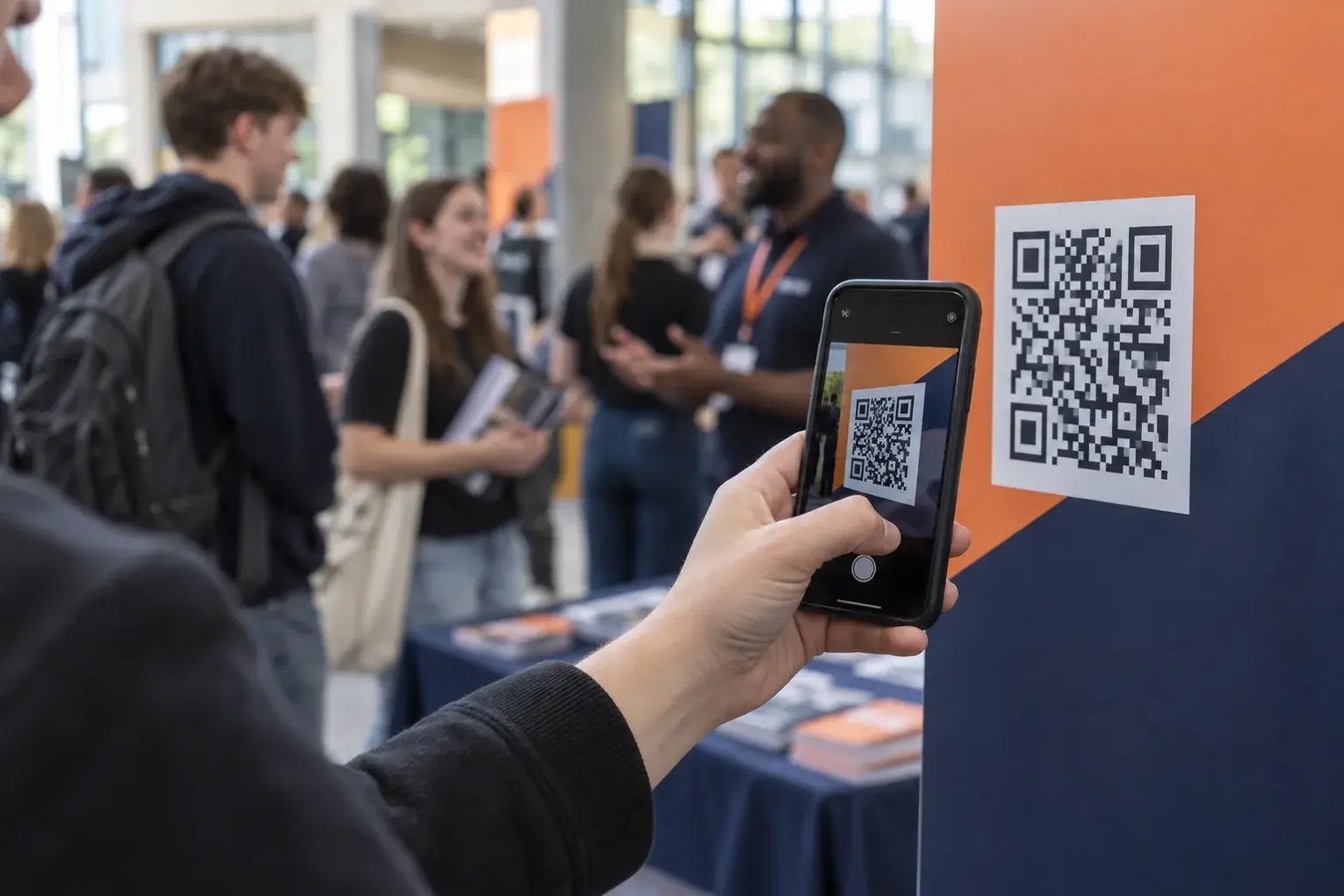
- Collect WhatsApp consent where people already are. Ask on the open day booking form, or use a QR code at the event, as Oaklands did with Future You.
- Write two versions, one for the student and one for the parent, and keep the WhatsApp text short and free of images.
- Send both channels from the CRM. Run email and WhatsApp from the same HubSpot workflows, so reads, replies and actions sit on one record. Check your HubSpot subscription early: sending WhatsApp from workflows needs a paid tier.
- Allow time for Meta. A WhatsApp message you start more than 24 hours after the person last messaged you must use a template Meta has approved, so write and submit your templates well before the first event.
The full story, from five systems to one applicant record, is in our Oaklands College case study. To try the same with your own applicants, see how WhatsApp Automation with Flowella works with HubSpot.